NeolemonNeolemonvsC2StoryC2Story

C2Story writes the book. We keep the character.

C2Story turns an idea or a manuscript into a finished illustrated story, fast. Neolemon is built for the part that usually breaks: keeping one cartoon character on-model across every page, pose, expression, and scene.

20 free credits. No card required.

4.5
Trustpilot, 94% 5-star
1M+
uses on our GPT
60%
publish to KDP
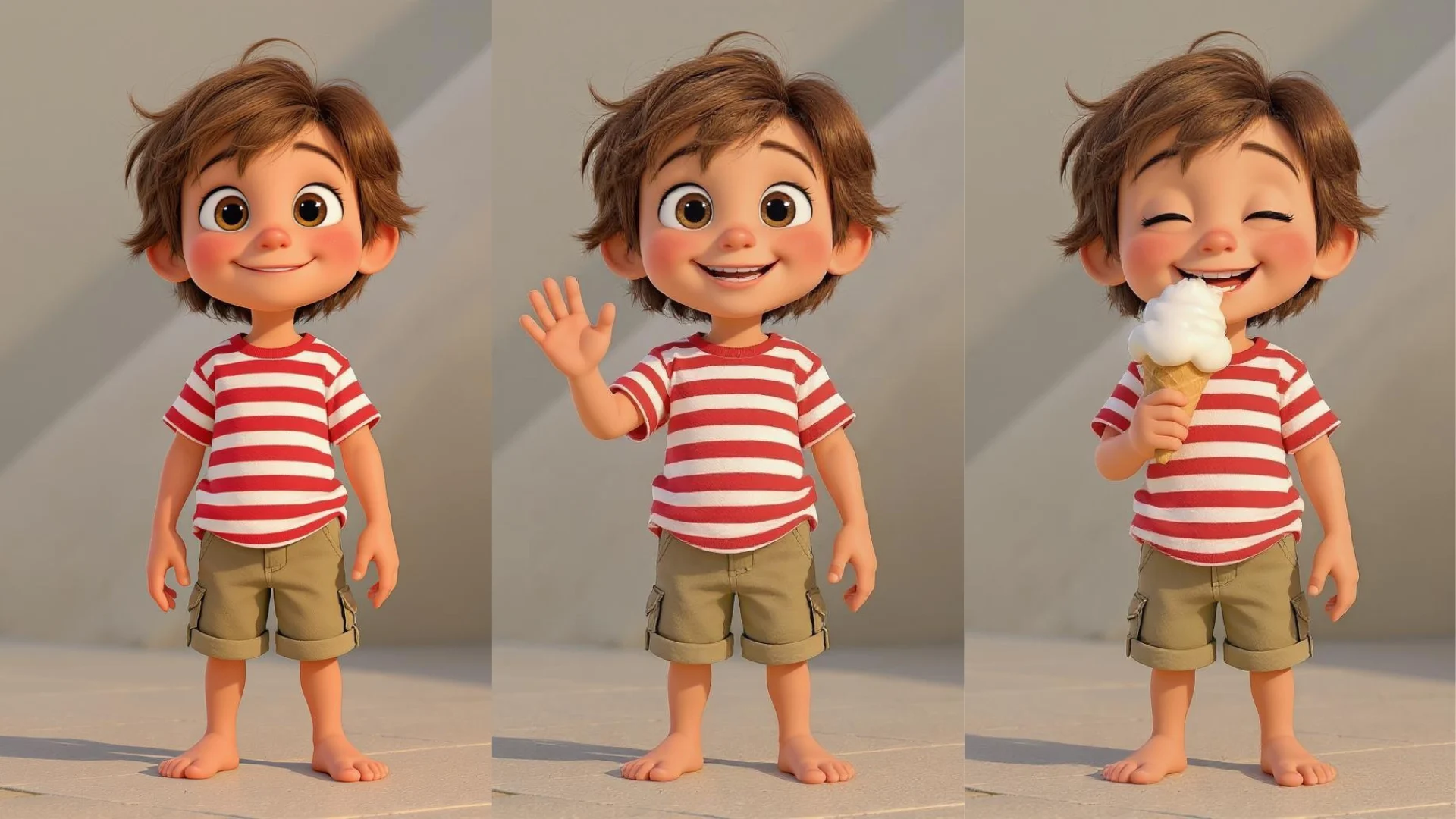
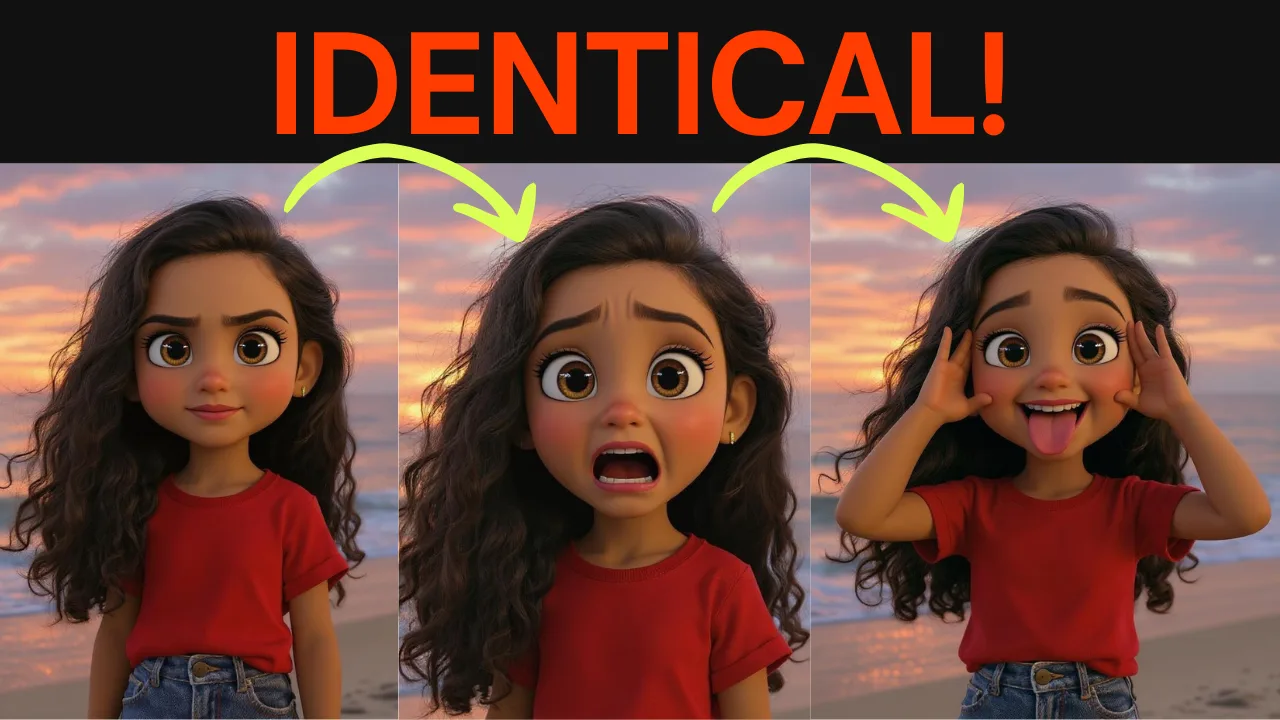
The same cartoon boy in three poses with an identical face, hair, and outfit

One character. Three poses. Zero drift.

The short answer

Which one is for you.

You have probably tried C2Story, or you are about to. Here is the honest split before any of the detail.

Choose C2Story

You want the platform to write and illustrate a whole storybook for you in one flow, plus character chat, remix, and a finished PDF. Ideal for a fast bedtime book or a classroom story.

Choose Neolemon

You already have a story or a character, and the hard part is control: holding one hero on-model across 24 to 32 pages, in the poses, expressions, and scenes you wrote.

Use both

Draft a quick story in C2Story, then bring the character to Neolemon for the final illustrations you can actually direct.

The whole comparison in one line

C2Story starts with the book. Neolemon starts with the character.

C2Story is wide on purpose: story writing, picture books, comics, manga, character chat, remixable worlds, a marketplace, many languages. Neolemon is narrow on purpose, around the one job that breaks every book generator.

C2Story does ten jobs

Story writing Picture books Comics & manga Character chat Remixable worlds Novel to book Marketplace Many languages Character across scenes

Real strengths, every one. But the last chip is the one a children’s book lives or dies on, and it is one slice of a very wide product.

Neolemon does one job, all the way down

Character Turbo Action Editor Expression Editor Outfit Editor Perspective Editor Story Scene Pro

Six tools, all pointed at one outcome: the same hero, recognizable, scene after scene, with you directing every variable.

Even people looking at C2Story notice it. On a recent C2Story update thread, one commenter put it plainly: “the character consistency piece is the real unlock here, most AI image tools break that immediately when you’re generating multiple scenes.” That is the exact ground Neolemon was built on.

What you are comparing

Two tools, two jobs.

Most “C2Story alternative” pages are directory listings that barely describe the product. Here is precisely what each one is, as of 2026.

C2Story

C2Story

An AI story platform

An idea, a pasted paragraph, or an uploaded novel goes in, and an illustrated 8 to 20-page book comes out, usually in a few minutes. Three named pillars: a story generator, a reusable character library, and remixable worlds.

  • Story generator. The platform writes the prose and illustrates it, from idea, text, or a full manuscript.
  • Character library. Save and reuse characters, locations, and items across stories.
  • Worlds and chat. Remix other creators’ stories, chat with characters, and export a PDF or ZIP.

Worth knowing: C2Story is a small indie product that began in 2024 as a multi-model AI writing assistant and was rebuilt into an illustrated-book platform in late 2025. That is a fine way to ship, but the public docs and marketing pages do not always agree on prices, styles, or what each tier unlocks. Check the live page before you pay.

C2Story wordmark
Neolemon

Neolemon

A character workshop

Formerly ConsistentCharacter.ai. You build one anchor character, then direct it scene by scene. The book is what you make with the character, not what the tool hands you.

  • Character Turbo builds the anchor from structured Description, Action, Background, and Style fields.
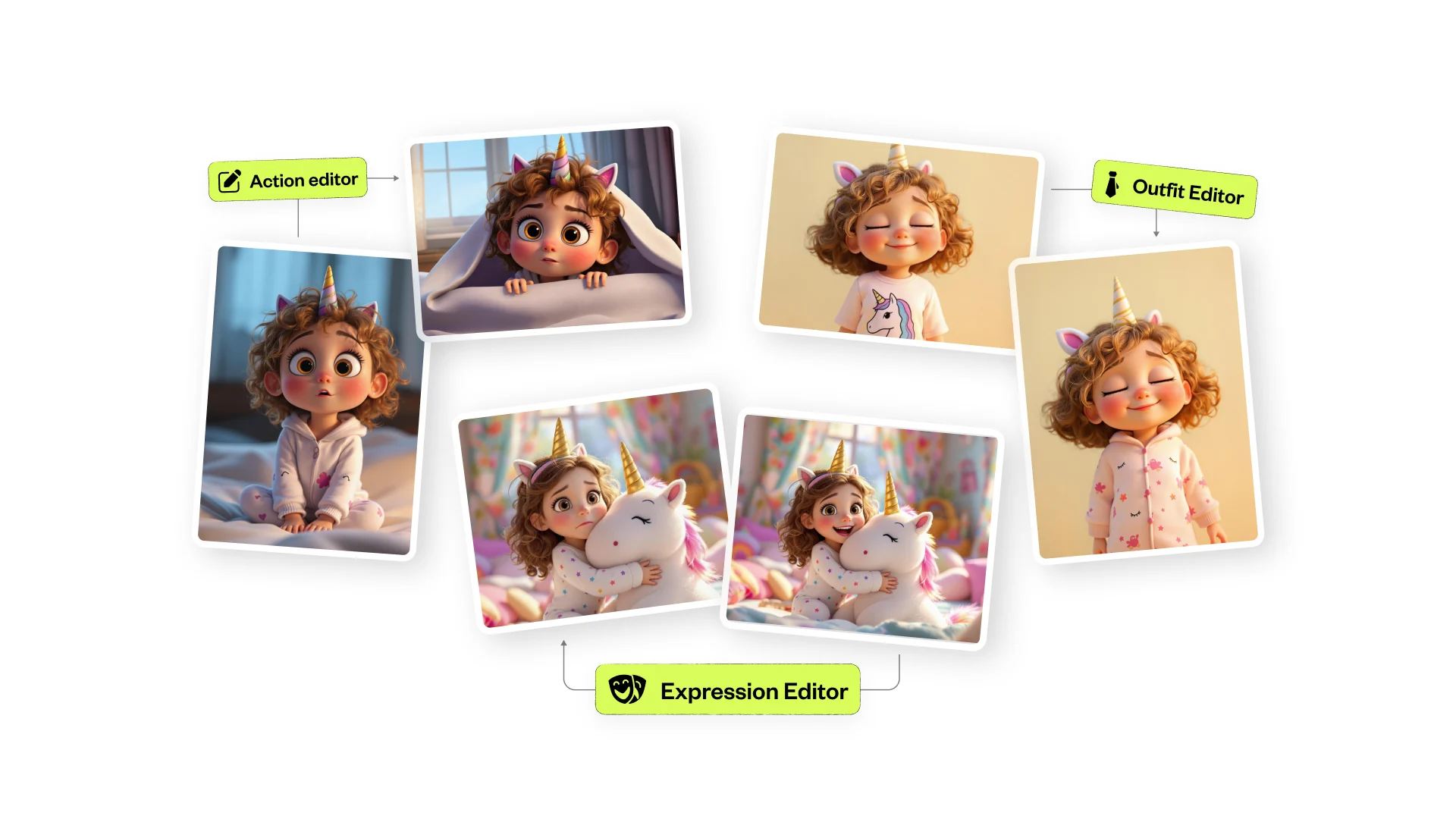
  • Action, Expression, Outfit, Perspective editors change one thing at a time, identity locked.
  • Multi Character and Story Scene Pro compose up to three characters with a background reference.
  • AI Canvas, Coloring Book Creator, Storyboard take you from assets to a laid-out book.
Neolemon editors generating the same character in different poses and outfits

How consistency actually works

Lock the face. Change everything else.

Any tool can make one cute character. It falls apart around page 20, after your hero has been regenerated into thirty new scenes and quietly stopped being the same kid. Neolemon never re-rolls the character.

1

Anchor

One clean front view of your character in Character Turbo. Every scene derives from this single reference.

2

Pose it

Action Editor changes the pose. Face, outfit, and style stay exactly where they were.

3

Emote it

Expression Editor moves the eyes, brows, and mouth. Same child, twelve different feelings.

4

Compose it

Drop the character into a background, or compose several with Story Scene Pro. No identity blending.

The same cartoon girl in three expressions, identical face and outfit

Why it holds where others drift

C2Story generates the whole book in one pass and reuses a saved character to keep it steady. Neolemon conditions every image on your one anchor and changes a single variable at a time. The face you signed off on page 1 is the face on page 32.

The same approach powers the developer model on Segmind: a character reference plus an optional pose reference. It is a workflow for controlling consistency, not a hope for it.

The limit nobody mentions

The long book is the one that hits the wall.

This is not our claim, it is C2Story’s own pricing page. The cheap tiers are generous for a short, light book, then quietly cap exactly the thing a picture book needs: more pages and more retries.

C2Story, the page gate

16

page maximum until you reach 300 credits. Below that, you are limited to 8 or 12-page books. The KDP page shows a 24-page example, but the pricing page does not list 24 as an unlock.

C2Story, every fix

1 credit

per regeneration. Bad hands, a drifted face, a wrong scene, each retry spends a credit, so a real 12-page book with a few fixes runs closer to 18 credits than the advertised 10 to 15.

Neolemon

You decide

About 150 generations a month and no page-count gate. A 24 or 32-page book is a workflow, not a tier you have to unlock. You set the length, not the plan.

For a quick 8 to 12-page story, C2Story’s caps never bite, and the low price is a real win. For a KDP picture book where your hero is on every one of 32 pages, they are the first wall you hit. Verify the in-app page limit before you commit anything longer than 16 pages.

Feature by feature

The full comparison.

Grouped by what you are actually deciding on. Where C2Story is the stronger pick, it says so plainly.

Capability C2Story Neolemon
Character control
Consistency across pagesClaimed, at the book levelThe core product: anchor plus editors
Pose and actionNot exposed publiclyDedicated Action Editor
ExpressionNot exposed publiclyDedicated Expression Editor
Outfit and camera angleNot exposed publiclyOutfit and Perspective Editors
Multi-character scenesReusable cast inside book scenesMulti Character and Story Scene Pro
Reusable across a seriesCharacter libraryAnchor image you reuse anywhere
Story and book
AI writes the storyYes, idea or text to full storyNo, you bring your own
Novel to illustrated seriesYes, upload and split chaptersNo native flow
Character chatYes, on paid tiersNo, this is production not chat
Photo to main characterYes, child as heroYes, Photo to Cartoon
Pages per book8 to 16, 16 unlocks at 300 creditsYou decide, no gate
Multilingual story creationYes, English, Chinese, Japanese, moreEnglish-led, you bring the text
Coloring-book pagesStyle filterColoring Book Creator, one click
Layout and canvasBuilt into the book flowNative AI Canvas and Storyboard
Print export300 DPI PDF and ZIP, KDP marketedStoryboard PDF, finish in your layout tool
Pricing and rights
Free way to try10 credits a day, limited pool20 credits, no card
Cheapest subscription$10.99 a month, 100 credits$29 a month, 600 credits
Commercial rightsPaid tiers, language varies by pageEvery paid plan
Credits roll overNo on subscriptions, packs never expireMonthly refresh
Developer APIListed on paid tiers, terms thinSegmind V3 API

Pricing and limits as listed on C2Story’s public pages, which are not always in sync with each other. Check the live checkout before you buy.

Pricing

Cheaper to start. Not always cheaper to finish.

C2Story is genuinely the easier yes at the front door. The honest question is not the sticker price, it is the cost per finished book after page caps and retries.

C2Story

PlanPriceWhat it buys
Free$010 credits a day, limited pool
Starter$10.99/mo100 credits, 8 to 12-page books
Creator$24.99/mo300 credits, 16-page books unlock
Studio$49.99/mo600 credits
  • 1 credit is 1 illustration, and every regeneration costs a credit.
  • Subscription credits do not roll over. One-time packs never expire.
  • Public and community characters cost a credit each to use.
  • 16-page books need Creator or 300+ credits, so Starter is not the full picture-book tier.

Neolemon

$29 / month, flat

600 credits, about 150 generations at 4 credits each. Plus a free trial: 20 credits, no card.

  • Every character-consistency editor included. No tier gates the long book.
  • Commercial-use rights on the only paid plan.
  • Credits power deeper edits across the editor stack, not just one-shot pages.
  • You set the page count, not the plan.
See Neolemon pricing

If you make the occasional short book, C2Story is cheaper, and its credit packs that never expire are a real perk for burst creators. If your bottleneck is character consistency across a longer book, count usable final scenes after the retries, not the monthly price. That is where the gap closes.

Proof, with names

What people actually ship.

Most comparison pages skip this because they do not have it. Here are both sides, real names and real sources, the good and the unflattering.

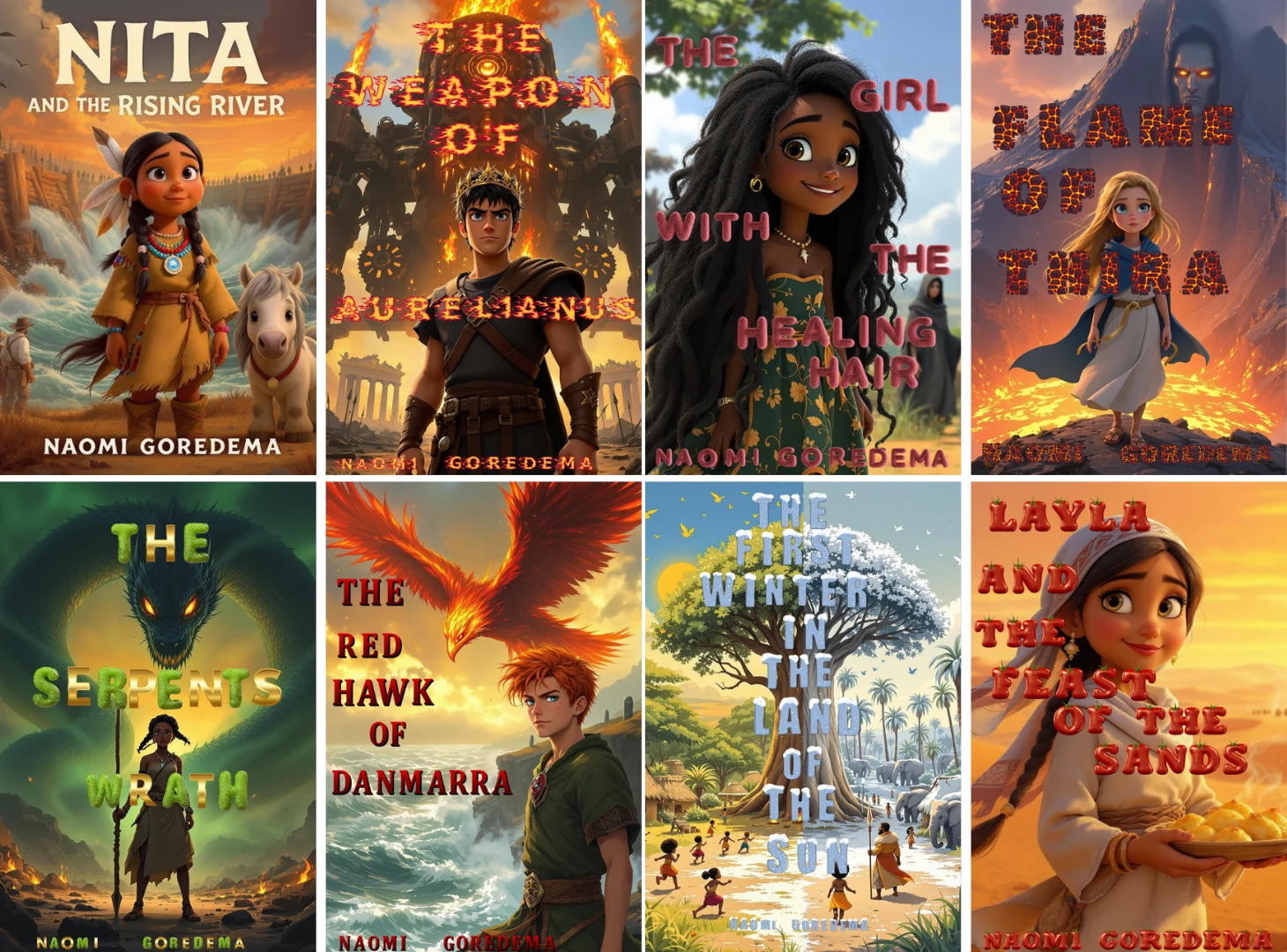
Finished children's book covers illustrated with Neolemon by author Naomi Goredema
20 books in 4 months. Naomi Goredema, children’s author. Her old workflow took three days per character; with Neolemon it is about thirty seconds.

On C2Story

C2Story’s public review base is thin: G2 lists 0 verified reviews, and TopAI.tools has 6, split evenly. So this is forum and launch-thread talk, not a review corpus. The praise is for the idea and the price; the complaints are about output and structure.

“The character consistency piece is the real unlock here, most AI image tools break that immediately when you’re generating multiple scenes.”

nk90600, on r/SideProject

“My attempt resulted in a short story only 500 words long. That is pretty short. And there is no continue from here button or similar.”

alsosprachzar2, on r/WritingWithAI (early version)

“Requires sign in.”

abstractspoon, on Hacker News

The recurring theme is exactly what we obsess over: holding one character steady across scenes, and giving creators more structure and control, not less.

On Neolemon

Our proof is finished work, not tool reviews.

  • Patricia Wonsey, a former teacher, made over $1,000 in her first week selling coloring books built on Neolemon.
  • Brian McPhee shipped an 83-page book with 47 illustrations, 13 characters, and 12 stories.
  • Erica Weinstein built an 8-scene rom-com storyboard with the same cast across every scene.
  • “This app has become an invaluable tool in my creative process.” Joanne Mohammed, children’s author.
4.5★★★★★34 reviews, 94% 5-star on Trustpilot

Credit where it is due

Where C2Story wins.

We will go first. These are things C2Story genuinely does better than us. If one is what your project needs, it is the right tool, and we mean that.

The whole book in one flow

Idea or manuscript in, written and illustrated book out, in minutes. The closest thing to push-button.

Novel to illustrated series

Upload a long text, split it into chapters, and turn each into a book with a shared cast. We have no native equivalent.

Character chat

Talk to your characters, and let young readers chat alongside the book. Emotionally sticky, and we do not have it.

Remixable worlds

Branch and continue other creators’ stories, with credit, like forks for illustrated books. That community layer is its own lane.

Multilingual breadth

First-class story generation in English, Chinese, Japanese, and more. We are English-led, so if you live across languages, C2Story is closer.

A cheaper entry price

$10.99 a month, or one-time packs that never expire. For a hobbyist testing the waters, that is the easier yes.

Child as hero, in one form

Describe the kid, pick a style and reading level, and get a personalized book. Simpler product language than our multi-step flow.

Print-ready PDF messaging

It markets 300 DPI PDF export straight for KDP and IngramSpark. We are more cautious about calling our export print-ready.

Take it seriously and build something good. If you later hit the page cap or the character drift that brings most authors here, you know where we are.

Our turn, same rules

Where Neolemon wins.

Cartoon-only, on purpose. Built around the one job that breaks every book generator once the book gets long.

Consistency is the product

Not a feature claim bolted onto a book flow. The whole tool exists to hold one character steady across scenes.

You bring the manuscript

You wrote the story. You do not want it rewritten, you want it drawn, scene by scene, your way.

No page-count gate

C2Story caps you at 16 pages until 300 credits. A 24 or 32-page book here is a workflow, not a tier.

Edit one variable at a time

Change the pose, the expression, the outfit, or the camera angle alone. Dedicated editors C2Story does not expose.

Scenes you can direct

Compose one to three named characters into a single scene with a background reference, via Story Scene Pro.

Coloring books for KDP

Any image becomes a print-ready coloring page in one click, a high-volume KDP category C2Story only style-filters.

A real developer API

The V3 model is on the Segmind API, with a clear character-reference anchor, for agencies and serious creators.

An education layer

A course, a free community, a newsletter, and the Consistent Character GPT with over a million uses.

Honest about its limits

Cartoon-only, no native print, three-plus characters still need iteration, and we say all of it up front.

Route yourself

Who should pick which.

C2Story

  • A parent making a personalized bedtime book end-to-end.
  • A teacher generating a quick classroom story for tomorrow.
  • A first-time author who wants a rough illustrated draft fast.
  • You write mainly in English, Chinese, or Japanese.
  • You want character chat, remix, and shared story worlds.
  • The $10.99 starter price is the deciding factor.

Neolemon

  • A KDP author illustrating your own manuscript across 24 or more pages.
  • The same hero has to appear in book 1, book 2, and book 3.
  • You need control over pose, expression, outfit, and angle separately.
  • You publish coloring books, or art-direct for clients.
  • You want commercial rights on the cheapest paid plan, or API access.
  • You feed cartoon frames downstream into animation or social.

Use both

  • C2Story for the speed of a first story draft.
  • Neolemon for the controlled final illustrations.
  • Test the gift-book market with one while you build your series with the other.

The switch

Moving a book from C2Story to Neolemon.

Hit the wall on character drift or the page cap? Here is the path, start to finish. The trick is to bring the character, not the book.

  1. 1

    Bring the character

    Rebuild your hero in Character Turbo from structured fields. Aim for a full-body front view.

  2. 2

    Or start from a photo

    If the character is a real kid or pet, run Photo to Cartoon, then Prompt Easy for the prompt.

  3. 3

    Keep your manuscript

    You already have the story. You need the visuals, not another rewrite.

  4. 4

    Generate poses

    Action Editor for standing, walking, sitting. Face and outfit stay locked.

  5. 5

    Create expressions

    Expression Editor for happy, worried, brave. The same child, every feeling.

  6. 6

    Build each scene

    Anchor plus action plus background, per page. Story Scene Pro for the busy ones.

  7. 7

    Handle multi-character

    Two characters with Multi Character. Past three, expect to iterate.

  8. 8

    Assemble the book

    Drag scenes into AI Canvas, add text, sequence panels in Storyboard, export the PDF.

  9. 9

    Lay it out for print

    The storyboard PDF is not a print interior. Finish in Canva, Vellum, Affinity, or InDesign at 300 DPI.

  10. 10

    Publish and disclose

    Upload to KDP, Lulu, or IngramSpark, and disclose AI images, which KDP requires.

The wider field

What about the other alternatives?

If you searched “C2Story alternative,” you have seen these names too. Here is the honest lay of the land.

ChildBook, MyStoryBot, StoryBee, StoryJumper

Like C2Story, these are book generators. They make a finished personalized story fast. None is built around directing one character across a long book or a series.

NovelAI and Character.AI

C2Story itself compares against these for long-form prose and open-ended chat. Different jobs again, neither is an illustration-control tool.

Neolemon

The one on this list built for illustration control, not book generation. If consistency across pages is the problem, this is the different category.

No half-truths

What to watch out for, on both sides.

C2Story

  • Prices, style counts, and commercial-rights language differ across its own pages. Check the live checkout.
  • 16-page books unlock only at 300 credits, and the KDP page shows 24 pages without listing it as an unlock.
  • Every regeneration spends a credit, so “10 books a month” assumes few retries.
  • Subscription credits do not roll over. Public characters cost a credit to use.
  • Public proof is thin: 0 verified G2 reviews, and some homepage personas are labelled samples.
  • A small indie product, rebuilt in late 2025, with a light public team and company footprint.

Neolemon

  • Cartoon-only since 2025. For photoreal humans, Midjourney or Flux is the right tool.
  • It does not write the story. You bring the manuscript, or plan it with our companion GPTs.
  • Three or more characters in one frame still need iteration.
  • The storyboard PDF is a storyboard, not a print-ready KDP interior.
  • Commercial-use rights are not copyright ownership. The law is still evolving.
  • KDP requires AI disclosure regardless of which tool made the images.

We would rather lose a buyer to honesty than win one with a half-truth.

Questions

What authors ask before switching.

Is Neolemon a good C2Story alternative?+

For a specific buyer, yes. If you tried C2Story and want more control over the character after the story is generated, or you need the same cartoon character across many poses, expressions, outfits, and scenes, Neolemon is the closer fit. If you want the platform to write and illustrate the whole book in one flow, C2Story is closer.

What is the real difference between C2Story and Neolemon?+

C2Story starts with the book: an idea or manuscript goes in, a finished illustrated story comes out, with chat and remix on top. Neolemon starts with the character: you build one anchor and direct it scene by scene with dedicated editors. C2Story is a story platform; Neolemon is a character workshop.

Is C2Story good for consistent characters?+

C2Story claims reusable, persistent characters across books and pages, and that claim is real. What its public pages do not expose at the same depth is granular control over pose, expression, outfit, camera, and scene composition once you want to edit that character. That control is where Neolemon is more hands-on.

Which is better for children’s book illustrations?+

It depends on length and control. For an 8 to 16-page book with a fast turnaround and draft quality, C2Story. For a 24 to 32-page book with a recurring character, series potential, and art direction that matters, Neolemon. See Naomi Goredema’s 20 books in 4 months and Brian McPhee’s 83-page book.

Which is better for Amazon KDP?+

For instant print-ready PDF messaging, C2Story is more aggressive, with a dedicated KDP page and 300 DPI claims, though you should verify the in-app page limit first. For character consistency across the book, reusable assets across a series, and coloring books specifically, Neolemon is the better workflow. Our storyboard PDF is a storyboard; you finish the interior in your usual layout tool. Both publishers must disclose AI images to KDP.

Which is better for comics and manga?+

C2Story has dedicated comic and manga pages and multilingual breadth that includes Japanese, so if your project is squarely manga or webtoon, start there. Neolemon is cartoon-focused rather than manga-specialized, but its multi-character workflows are stronger for panel-level control if your comic is character-driven.

Which tool gives more control over poses and expressions?+

Neolemon, clearly. C2Story does not publicly expose dedicated pose, expression, outfit, or perspective editors. Neolemon ships Action, Expression, Outfit, and Perspective Editors as separate tools, each operating on a stable reference so you can change one variable without breaking the others.

Can Neolemon write the whole story automatically like C2Story?+

No. Neolemon’s core app generates visuals, not prose. We ship companion GPTs, a Storyboard AI Artist and a Cartoon Story Script Writer, for the writing layer, but you write the story there and bring the prompts back. If “the platform writes my book” is a hard requirement, C2Story is the right pick.

Which is cheaper, C2Story or Neolemon?+

C2Story is cheaper at entry: Starter is $10.99 a month for 100 credits, against Neolemon’s $29 for 600. The honest comparison is effective cost per finished book after regenerations and page caps. C2Story Starter does not unlock 16-page books, every retry costs a credit, and subscription credits do not roll over. If you create occasionally, C2Story’s one-time packs may be the best deal. If you create regularly and your bottleneck is consistency, Neolemon’s controlled workflow can cost less per usable page even at a higher monthly price.

How many pages can each tool make?+

C2Story’s AI Story Generator describes books as usually 8 to 20 pages, and its pricing FAQ limits users below 300 credits to 8 or 12-page books, with 16 pages unlocking at Creator or Studio. Its KDP page references 24 pages, but the pricing page does not list that as an unlock, so verify before committing to anything longer than 16. Neolemon has no page-count gate; you decide the length.

Can I use the images commercially?+

Both include commercial-use rights on paid plans, though C2Story’s commercial-license language varies across its own pages, so verify the current terms. Two caveats either way: commercial use is not the same as full copyright ownership, since copyright protects human authorship, and Amazon KDP requires disclosure of AI-generated interior and cover images.

Which tool is better if I already have a manuscript?+

Neolemon. C2Story is optimized for the platform writing the prose and illustrating it together. If you already have the manuscript, you do not need that writing layer, you need the visual production stack, which is exactly what Neolemon is.

Which tool is better for a fast bedtime story?+

C2Story. One flow, one click, the kid is the hero, the book is done. That is the workflow it was built for, and we would point you to it.

Are the Neolemon customer stories real?+

Yes. Naomi Goredema, Patricia Wonsey, Erica Weinstein, Brian McPhee, and Joanne Mohammed are all publicly sourced from newsletter posts, LinkedIn, and Neolemon’s own publication. We do not use composite personas as customer testimony.

The whole comparison, in one question.

What is the hard part of your book? If it is writing the story and shipping fast, you wanted C2Story, and we mean that. If it is keeping your hero on-model across every scene of a long book, you wanted Neolemon.

See if your hero holds up across 32 pages.

Run one character through the editors and watch the face stay put. 20 free credits, no card.

If C2Story is the right tool for your project, use it. If consistency is what you are after, that is what we built.